Reviewing One Lucky Sister Svg for Embroidery Projects
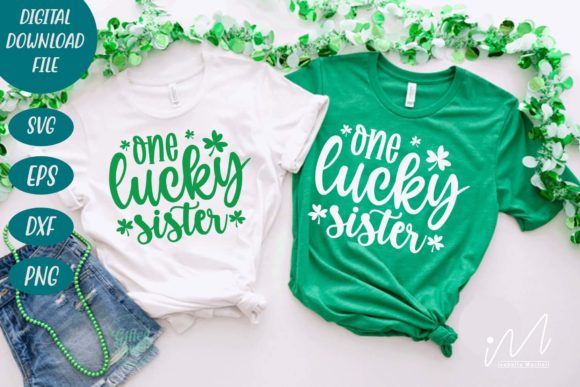
As a designer who has spent countless hours digitizing and stitching out files for clients, I have learned that not every graphic translates well to thread. When I first pulled up One Lucky Sister Svg, my initial reaction was cautious optimism. The phrase itself carries warmth and familial pride, making it an instant candidate for personalized gifts. However, the real test is never how it looks on a screen, but how it behaves under the needle. This review breaks down the practical application of this design for those of us running craft businesses, selling on Etsy, or simply creating high-quality handmade products for friends and family.
First Impressions and Visual Personality
The mood of One Lucky Sister Svg is celebratory yet grounded. It does not rely on overly complex flourishes that often cause stitching headaches. Instead, the layout suggests a clean, modern aesthetic that appeals to a broad demographic. For embroidery designers, this simplicity is a double-edged sword. It allows for versatility across different fabrics, but it also means the typography must be flawless. Any imbalance in letter spacing or weight becomes immediately obvious once stitched.
In terms of visual personality, this design fits naturally into the realm of boutique branding and custom apparel. It feels appropriate for a sweatshirt embroidery project where comfort meets style, or as a subtle accent on a tote bag design. The lack of excessive detail suggests that the original creator intended for this to be user-friendly, allowing makers to change colors and sizes with appropriate software without losing the core integrity of the message.
Real-World Application: The Custom Sweatshirt Test
To evaluate this properly, I imagined a specific scenario: a customer ordering a matching set for a sister’s birthday. The goal was to create a personalized gift that felt premium, not mass-produced. I visualized placing One Lucky Sister Svg on the left chest of a mid-weight cotton blend sweatshirt. This placement is critical. It is small enough to be elegant but large enough to be readable.
When working with SVG, DXF, EPS, and PNG Transparent formats, you have the flexibility to scale the design. However, scaling down too much can be dangerous for embroidery. If you reduce the size significantly for a baby item or a cap, the thin strokes of the letters might disappear into the fabric texture. For this specific project, I would recommend keeping the width between three to four inches to ensure clarity. The design performs best when it has room to breathe, avoiding the cramped look that plagues many low-quality digital embroidery files.
Material Considerations and Stitching Strategy
One of the most important aspects of using any machine embroidery design is understanding how it interacts with different materials. One Lucky Sister Svg appears to rely heavily on line work and potentially fill stitches depending on how you choose to digitize or convert it. If you are using this as a cut file for vinyl, the process is straightforward. But for embroidery, you must consider stitch density.
If you are stitching this onto textured fabrics like terry cloth towels or fuzzy fleece, a simple running stitch might get lost. In these cases, considering an applique design approach could be beneficial. You could use the SVG as a cut guide for fabric shapes, then satin stitch around the edges. This adds dimension and ensures the text remains legible regardless of the pile height of the fabric. Conversely, on smooth cotton or polyester blends, a standard satin stitch or light fill stitch will provide a clean, professional finish.
Dark fabrics present another challenge. If you are embroidering on a navy or black garment, you must ensure high contrast in your thread colors. A light pastel thread might look elegant, but if the stitch density is too low, the dark fabric will show through, making the text look sparse. Always test your thread colors on scrap fabric first. This step is non-negotiable for maintaining customer trust and ensuring your finished product looks polished.
Navigating Technical Limitations
While One Lucky Sister Svg is versatile, there are areas where caution is required. Curved surfaces, such as caps or hats, require careful hooping and stabilizer selection. The design’s linear nature means it must follow the curve of the cap correctly, or it will appear distorted. Using a stiff stabilizer is essential here to prevent puckering, which can ruin the visual appeal of even the best design assets.
Additionally, be mindful of tiny lettering. If you attempt to shrink this design for a small embroidered patch or a baby onesie, verify that the smallest details are still viable. Most home embroidery machines struggle with stitches shorter than 1.5mm. If the software conversion results in extremely short stitches, you may need to manually adjust the digitizing to merge some elements or simplify the paths. This is where having the EPS and SVG files is advantageous, as they allow for precise editing before the final conversion to a machine-readable format.
Commercial Viability and Brand Consistency
For Etsy sellers and small shop owners, the commercial viability of a design hinges on its ability to attract buyers while being efficient to produce. One Lucky Sister Svg taps into the evergreen market of family gifts. It is not tied to a specific holiday, which means it can be sold year-round. This consistency helps in building a reliable inventory of craft business items.
However, professionalism is key. Buyers can spot a rushed job from a mile away. Ensure that your hoop size matches the design dimensions to avoid unnecessary trimming or re-hooping. Use proper stabilizer techniques to ensure the garment remains wearable and durable after washing. A handmade product that falls apart after one wash damages your brand reputation far more than a slightly higher production cost saves you.
When creating printable mockups or digital product previews, use high-resolution images that show the texture of the thread. Customers want to see the quality of the satin stitch or the neatness of the fill stitch. Highlighting these details in your marketing can significantly boost buyer engagement and justify a higher price point for your custom apparel.
Final Designer Notes
Before launching this design into your production line, take a moment to review the license terms. While the product description mentions you receive multiple formats, it is crucial to confirm whether the license allows for unlimited commercial sales or if there are restrictions. Never assume; always verify. This protects your business from legal issues down the road.
Test the design in black and white mockups to check for balance. Sometimes color distracts from structural flaws in the layout. Compare how it looks on light versus dark backgrounds to determine your standard thread palette. Finally, remember that One Lucky Sister Svg is a tool. Its success depends on your skill in execution, your choice of materials, and your attention to detail. Treat it with the respect it deserves, and it will become a reliable staple in your library of graphics for Crafts and embroidery projects.