One Loved Teacher SVG: A Designer’s Embroidery Review
As a designer who has spent countless hours digitizing and stitching out files for clients, I approach every new Graphics asset with a critical eye. It is not enough for a design to look good on a screen; it must translate flawlessly into thread. When I first loaded the One Loved Teacher Svg into my workflow, I was looking for more than just a cute phrase. I wanted to know if this file had the structural integrity to hold up in a real-world embroidery project. After reviewing the layout and considering its application across various fabrics, I have formed a clear opinion on how this asset performs for both hobbyists and professional Etsy sellers.
First Impressions and Visual Personality
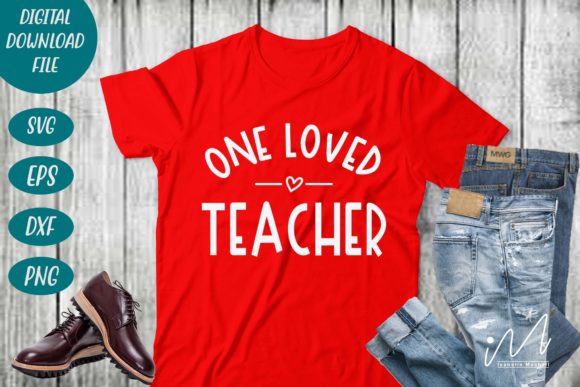
The immediate mood of the One Loved Teacher Svg is warm, appreciative, and classic. The typography suggests a balance between professionalism and heartfelt gratitude, which is essential for educational gifts. Visually, the lines appear clean and deliberate. For an embroidery designer, clean lines are the foundation of a successful stitch-out. Complex, jagged vectors often result in messy thread jumps or excessive trimming, but this design seems optimized for clarity.
The theme naturally leans toward appreciation and recognition. This is not a loud, trendy graphic that will date quickly. Instead, it feels like a timeless piece suitable for a personalized gift that a teacher might keep for years. The visual personality is understated yet impactful, making it versatile for various Crafts applications beyond just standard apparel.
Real-World Application: The Custom Tote Scenario
To truly test the viability of this design, I imagined a specific client request: a custom embroidered tote bag for a end-of-year teacher appreciation event. The client wanted something durable, washable, and elegant. Using the One Loved Teacher Svg as the central focal point on a heavy canvas tote is an ideal use case. The open structure of typical SVG lettering allows the fabric texture to show through slightly, preventing the design from feeling too heavy or plastic-like.
In this scenario, the design would likely be converted into a satin stitch for smaller elements or a combination of satin and fill stitch for larger letters, depending on the size scaling. The result would be a textured, tactile handmade product that feels premium. Unlike a printed vinyl transfer, the embroidered version adds depth and value, justifying a higher price point for a small shop product. Customers reacting to this item would perceive it as thoughtful and high-quality, enhancing brand consistency for any craft business offering such items.
Versatility Across Products and Fabrics
Beyond tote bags, this design shines in several other categories. For sweatshirt embroidery, the softness of fleece pairs well with the gentle sentiment of the quote. However, one must be cautious with stitch density. If the letters are scaled too large without proper underlay, the fabric may pucker. For baby embroidery projects, such as a onesie or bib, the design should be scaled down significantly. In these smaller applications, ensuring the text remains legible is crucial. Tiny details can get lost in the nap of terry cloth or the stretch of knit fabrics.
For those creating embroidered patch designs, this SVG serves as an excellent base. Patches require bold, clear outlines to define the shape against the backing material. The One Loved Teacher Svg can be adapted into an applique style, where a contrasting fabric is cut to the shape of the letters and then secured with a zigzag or satin border. This technique reduces bulk and adds a charming, vintage aesthetic popular in boutique branding.
Consider also holiday embroidery or special occasion gifts. While not explicitly seasonal, the sentiment fits perfectly into graduation seasons or teacher appreciation weeks. Using it on a kitchen towel or apron adds a personal touch that mass-produced items lack. For digital product sellers, this file can be used to create realistic printable mockup previews, helping customers visualize the final finished product before purchasing.
Technical Considerations and Limitations
While the design is strong, there are areas where caution is necessary. When working with dark fabric, thread color contrast becomes paramount. A light thread on dark cotton requires precise tension settings to avoid shadowing. Additionally, curved surfaces like caps present a challenge. The hoop movement on a cap frame can distort wide designs. If using this on a hat, ensure the width fits within the usable hoop area and consider breaking the design into smaller segments if necessary, though this specific quote is likely compact enough for standard cap hoops.
Textured fabrics, such as corduroy or thick wool, can swallow small details. If the One Loved Teacher Svg includes fine serifs or thin connectors, they may disappear into the pile. In such cases, increasing the stroke width in your vector software before converting to a machine embroidery design is a smart move. Always check whether the design works for both personal and commercial projects by reviewing the license terms provided with the download.
Practical Designer Notes for Best Results
Before committing to a final production run, follow these practical steps to ensure quality:
- Test on scrap fabric first: Never stitch directly on the final garment. Use a similar weight and weave to check for puckering or thread breaks.
- Check thread color contrast: View your design in black and white mockups to ensure the shapes are distinct even without color differentiation.
- Review stitch density: If you are digitizing this SVG yourself, adjust the density based on the fabric. Lighter fabrics need less density to prevent distortion.
- Confirm hoop size: Ensure the scaled design fits comfortably within your machine’s hoop, leaving room for stabilization.
- Use proper stabilizer: For stretchy fabrics like t-shirts, a cut-away stabilizer is often better than tear-away to maintain shape after washing.
- Inspect small details: Zoom in on the vector file. Are there any stray nodes or overlapping paths that could cause machine errors?
Since the product description notes that you receive SVG, DXF, EPS, and PNG formats, you have the flexibility to resize and recolor the design using appropriate software. This is a significant advantage for digital embroidery file users who need to adapt the artwork for different machines or aesthetics. However, remember that resizing an SVG does not automatically adjust stitch parameters if you are converting it to a stitch file. You must manually adjust stitch types and densities in your embroidery software.
Final Verdict on Commercial Viability
The One Loved Teacher Svg is a solid addition to any designer’s library of design assets. It offers emotional resonance and visual clarity, two key drivers of buyer engagement. For commercial embroidery professionals, it provides a reliable template for creating high-margin personalized items. Whether used for a simple tote bag design or a complex layered applique, it holds up well under scrutiny.
Ultimately, the success of this design depends on execution. By respecting the limitations of fabric and machine, and by applying thoughtful digitizing practices, you can transform this simple graphic into a cherished keepsake. It is a practical, versatile choice for anyone looking to add a touch of warmth to their custom apparel or gift offerings.